
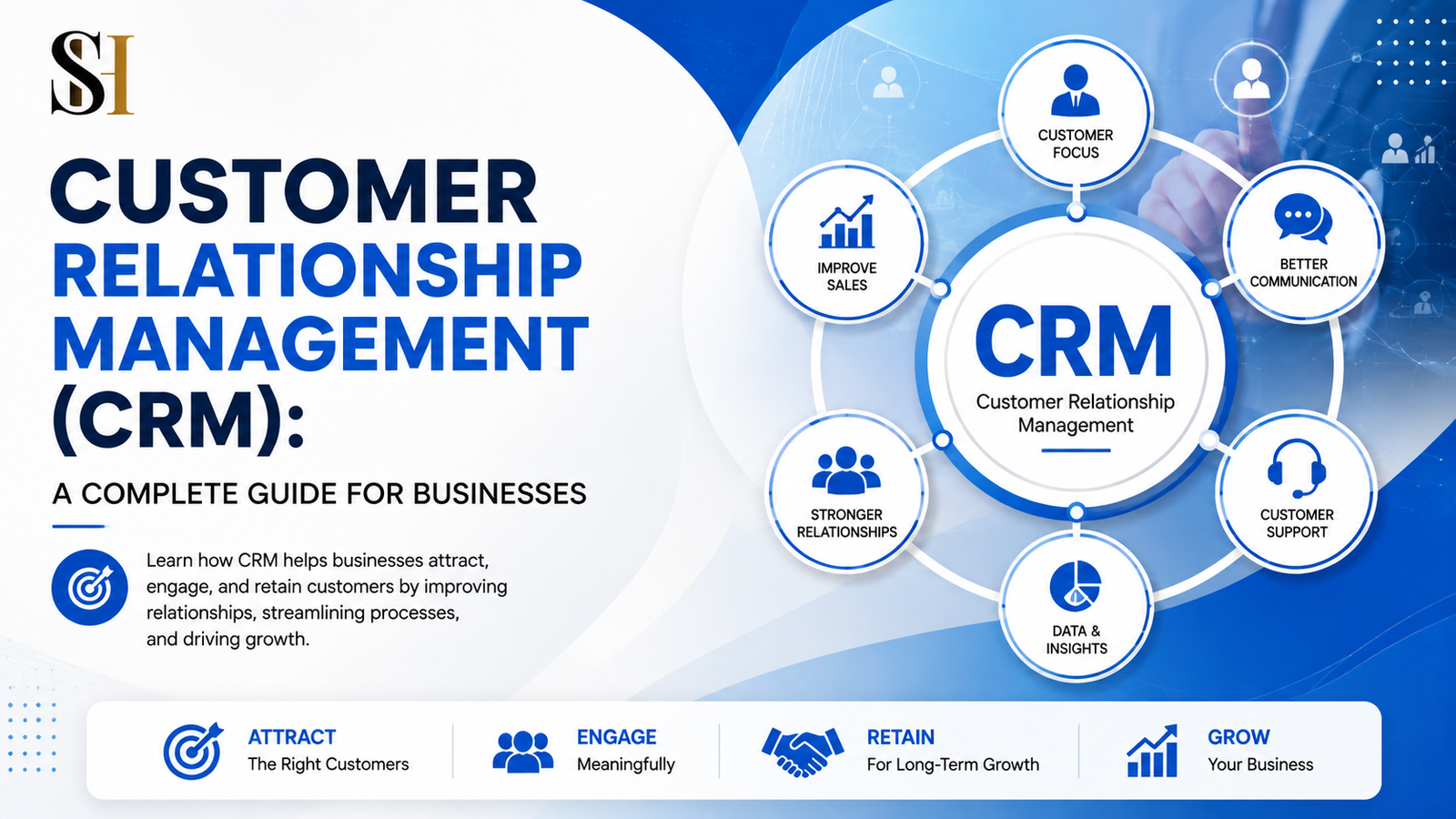
In today’s competitive business environment, attracting new customers is important, but building strong and long-term relationships with existing customers is equally important. Businesses need an organized way to understand their customers, manage interactions, follow up with leads, and improve customer experiences. This is where Customer Relationship Management (CRM) becomes valuable.
Customer Relationship Management (CRM) helps businesses organize customer information, manage sales activities, improve communication, and build stronger relationships. From small businesses to large organizations, CRM systems can make customer management more efficient and data-driven.
What Is Customer Relationship Management (CRM)?
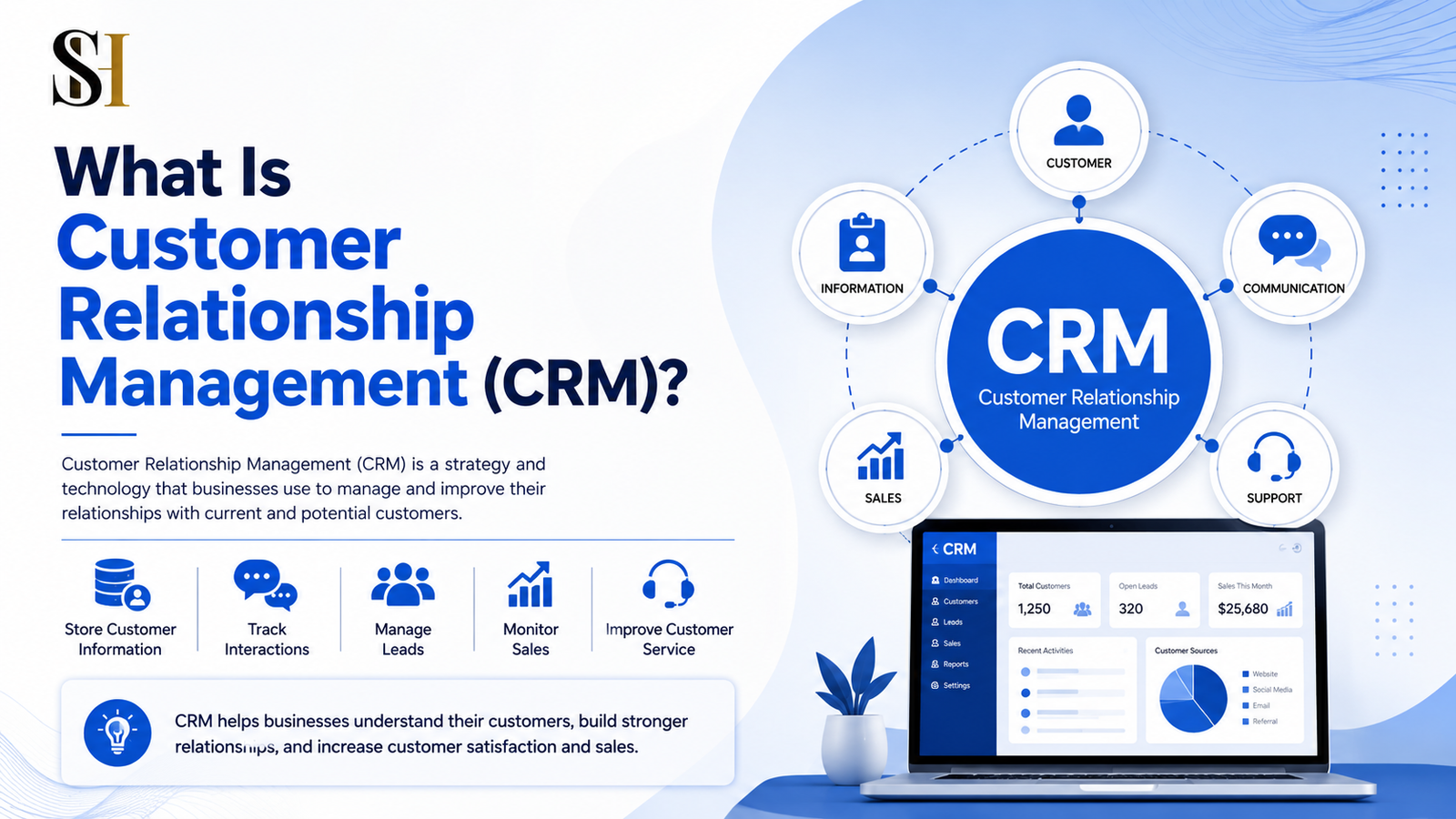 Customer Relationship Management (CRM)https://www.talkdesk.com/blog/what-is-customer-relationship-management/ is a strategy, process, and technology used by businesses to manage relationships and interactions with current and potential customers.
A CRM system stores important customer information such as names, contact details, purchase history, communication records, preferences, and sales activities in one organized place.
For example, when a customer contacts a business, the sales team can use the CRM to check previous conversations, understand the customer’s needs, and provide more personalized support.
Instead of keeping customer information in spreadsheets, notebooks, emails, or different applications, businesses can use a CRM platform to manage customer data more efficiently.
Why Is Customer Relationship Management Important?
 Customers expect businesses to understand their needs and provide quick, relevant, and personalized communication. Poor communication or missed follow-ups can result in lost customers.
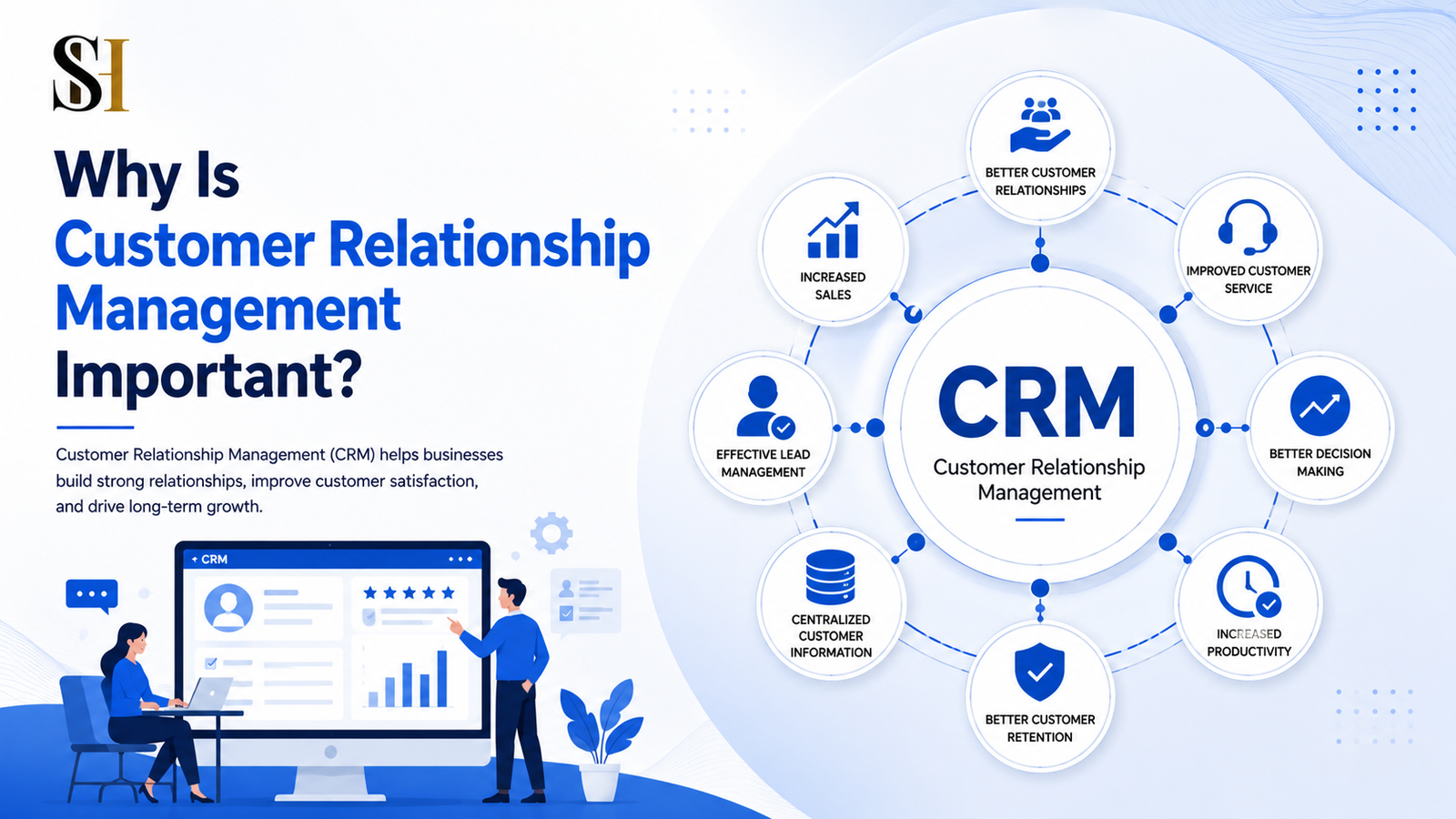
Customer Relationship Management (CRM) helps businesses maintain organized customer information and improve every stage of the customer journey.
Some major benefits include:
- Better customer communication
- Improved lead management
- Faster follow-ups
- Increased sales opportunities
- Better customer service
- Improved customer retention
- Centralized customer information
- Data-driven decision-making
- Increased productivity
- Better understanding of customer behavior
A good CRM system allows businesses to move from simply collecting customer information to actually using that information to improve relationships.
How Does Customer Relationship Management (CRM) Work?
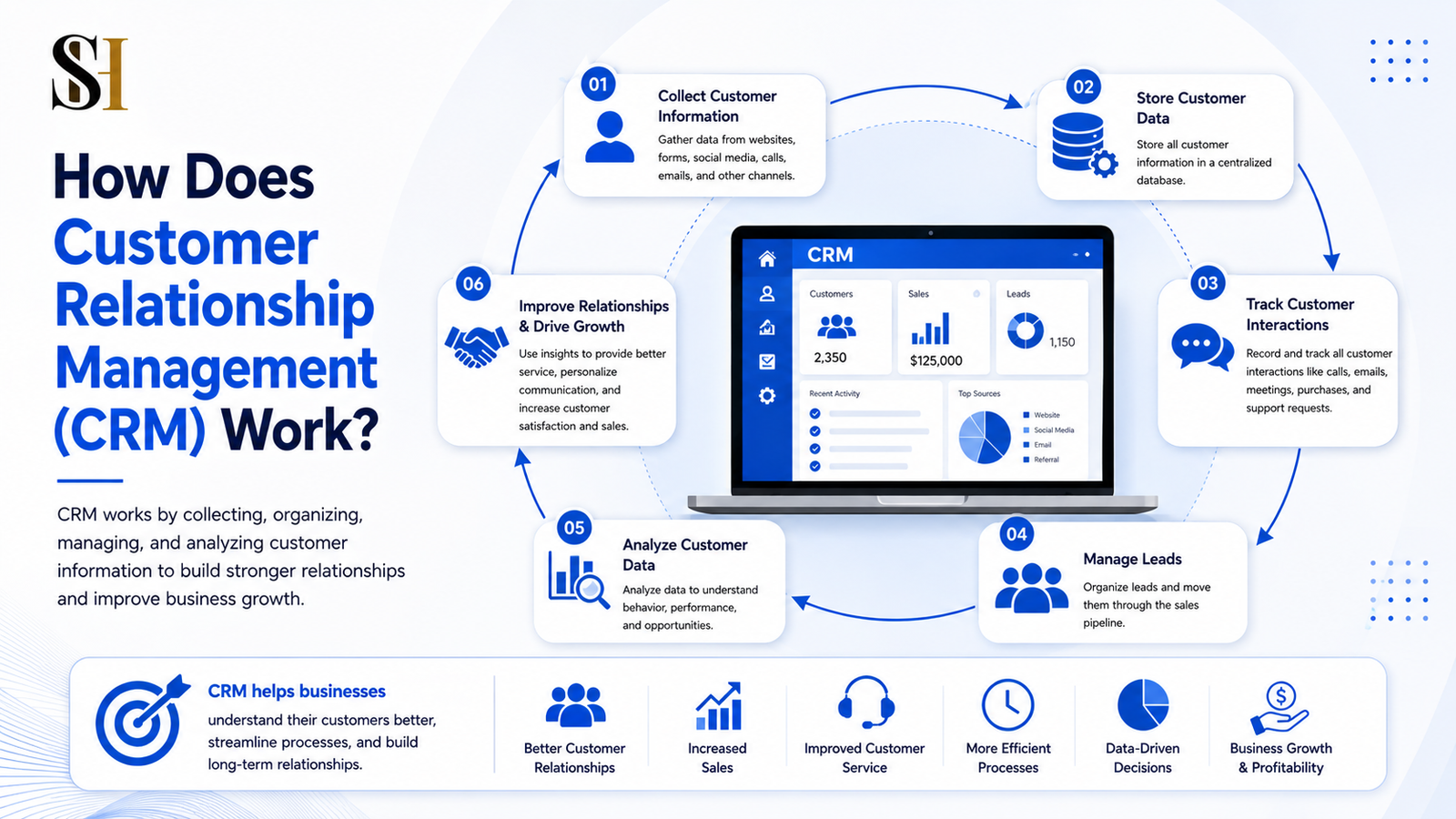 A CRM system generally works by collecting, organizing, and analyzing customer information.
The process usually involves several steps.
1. Collect Customer Information
Businesses collect customer information through websites, social media, forms, phone calls, emails, advertisements, and other channels.
For example, when a person fills out a contact form on a website, their information can be added to the CRM.
2. Store Customer Data
The collected information is stored in a centralized database. Sales and customer service teams can access relevant information when needed.
3. Track Customer Interactions
CRM systems can record interactions such as emails, calls, meetings, inquiries, purchases, and support requests.
This helps employees understand the customer’s history with the business.
4. Manage Leads
Potential customers can be added to the sales pipeline and moved through different stages, such as:
New Lead → Contacted → Qualified → Proposal → Negotiation → Won
This makes it easier for sales teams to understand which leads require attention.
5. Analyze Customer Data
Businesses can analyze CRM data to understand sales performance, customer behavior, lead sources, and other important business metrics.
Types of CRM
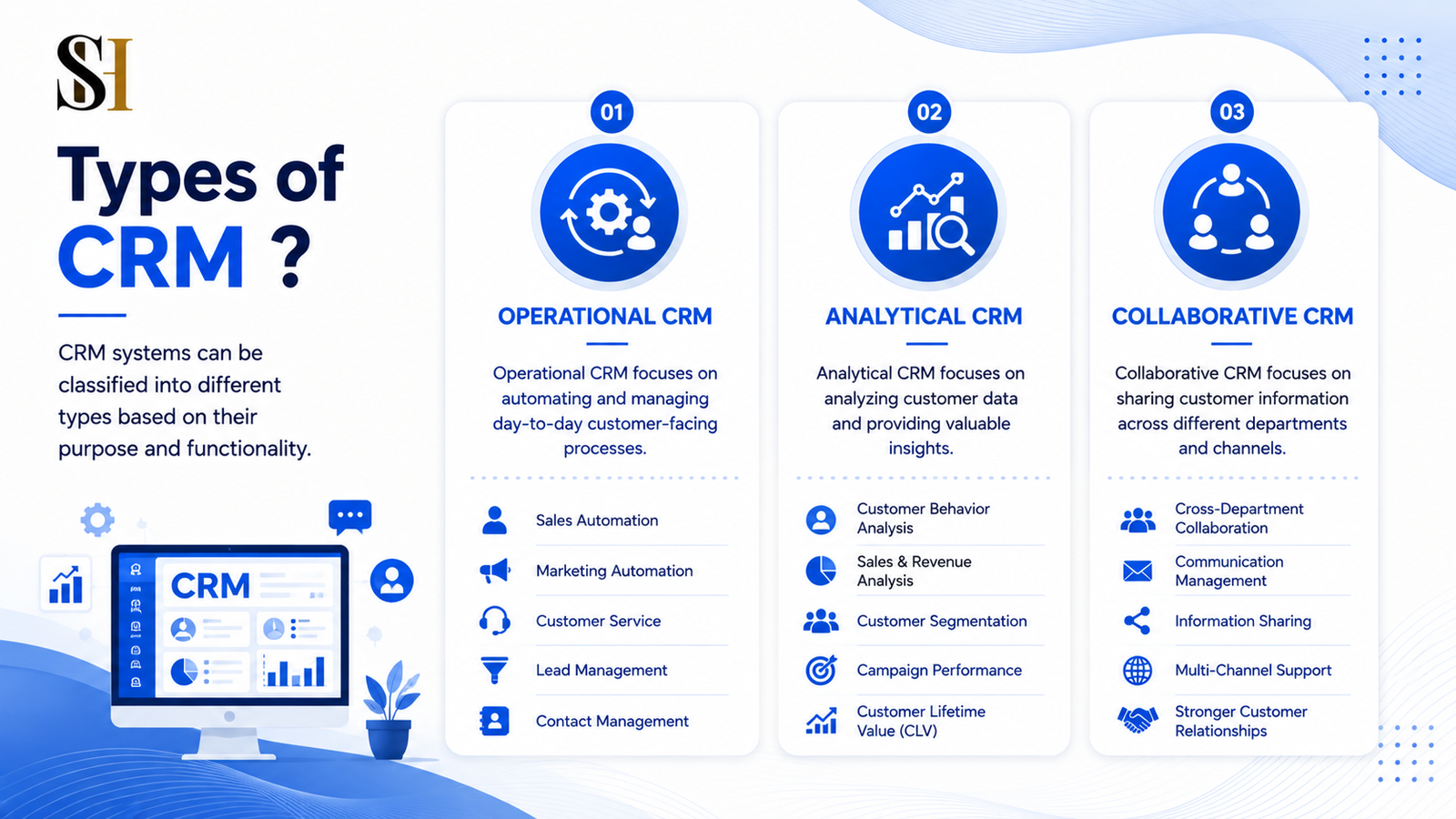 CRM systems can be broadly divided into different categories based on their purpose.
1. Operational CRM
Operational CRM focuses on automating and managing everyday customer-related activities.
It can help businesses with:
- Sales automation
- Marketing automation
- Customer service
- Lead management
- Contact management
This type of CRM is useful for businesses that want to improve their daily customer processes.
2. Analytical CRM
Analytical CRM focuses on customer data and business insights.
It helps businesses analyze:
- Customer behavior
- Sales trends
- Purchase patterns
- Customer segments
- Campaign performance
- Customer lifetime value
Businesses can use these insights to make better marketing and sales decisions.
3. Collaborative CRM
Collaborative CRM helps different teams share customer information.
For example, marketing, sales, and customer service teams can access relevant customer information from the same system.
This improves communication between departments and creates a more consistent customer experience.
Key Features of a CRM System
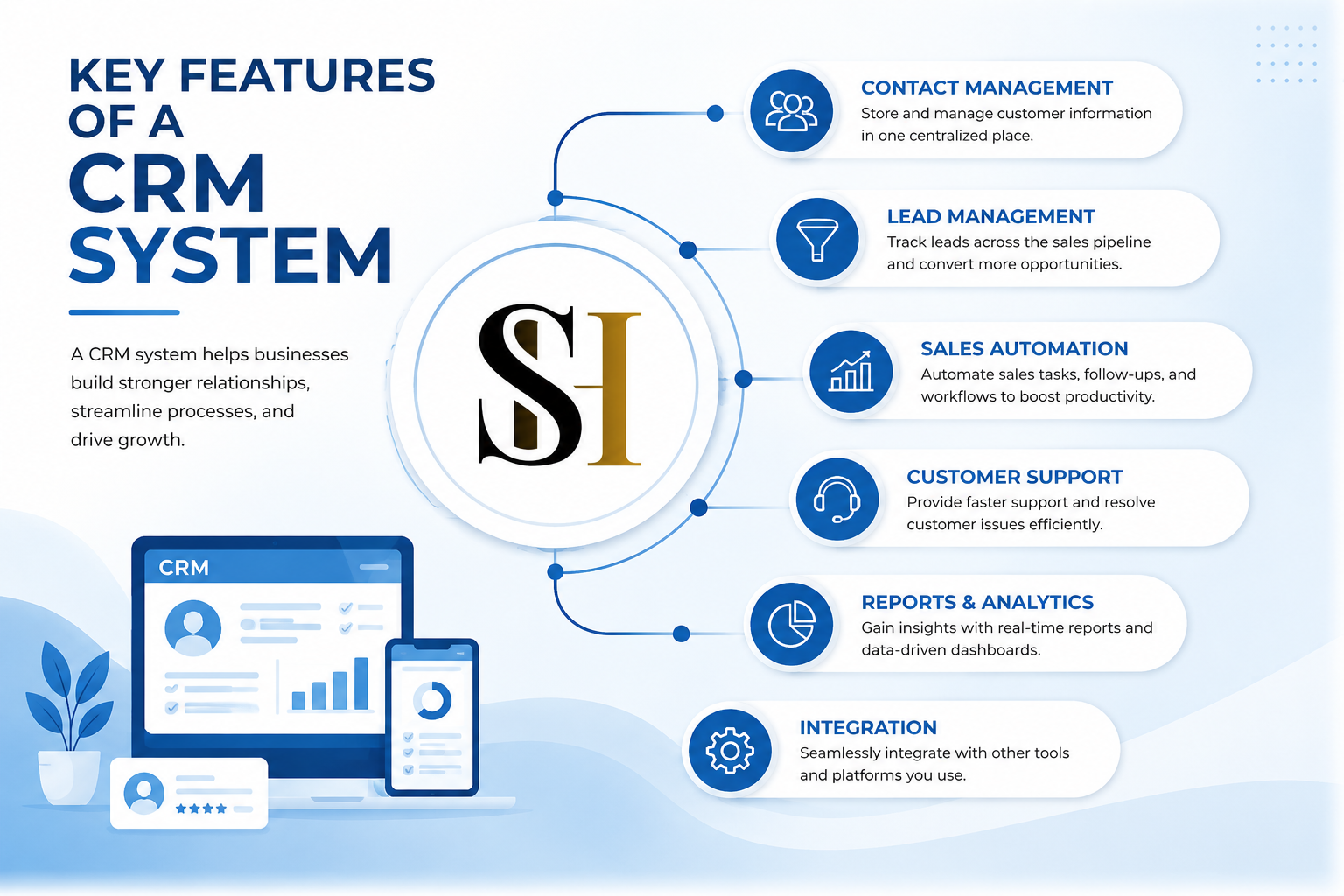 Modern CRM platforms offer a variety of features that help businesses manage customer relationships.
Contact Management
Contact management allows businesses to store customer names, phone numbers, email addresses, company information, and other relevant details.
Lead Management
Lead management helps businesses organize potential customers and track their progress through the sales funnel.
Sales Pipeline Management
Sales teams can visualize opportunities and understand which stage each potential customer is currently in.
Task and Follow-Up Management
CRM systems can help teams schedule tasks, reminders, meetings, and follow-ups so that important opportunities are not forgotten.
Email and Communication Tracking
Businesses can track customer communication and maintain records of important interactions.
Reporting and Analytics
CRM reports can provide insights into sales performance, lead conversion, customer retention, and other key metrics.
Marketing Automation
Some CRM platforms integrate marketing automation features that allow businesses to create email campaigns, segment customers, and nurture leads.
CRM and Digital Marketing
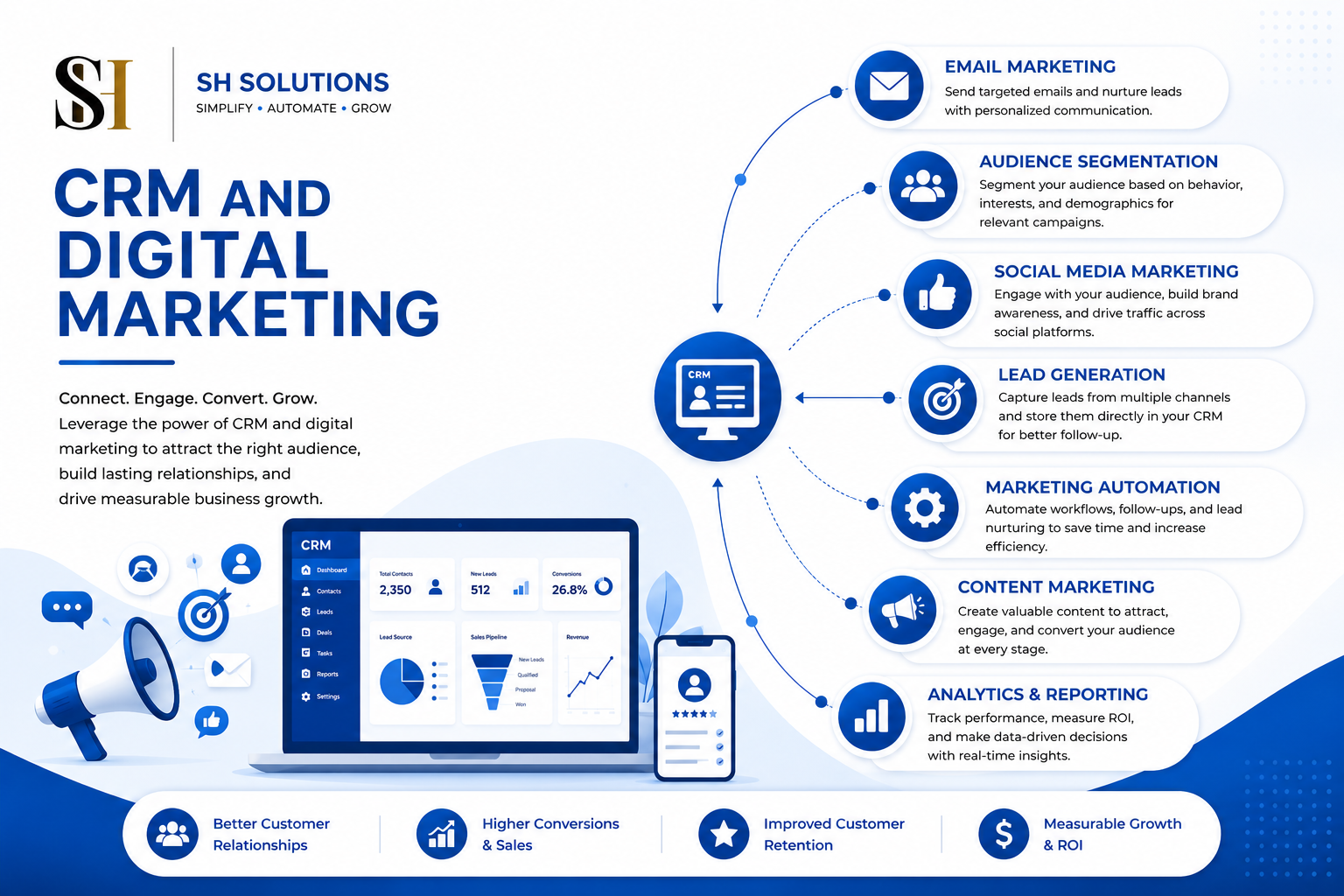 Customer Relationship Management (CRM) plays an important role in digital marketing because it allows marketers to better understand their audience.
Digital marketing campaigns generate leads from different channels such as:
- Google Ads
- Social media advertising
- Email marketing
- Search engines
- Websites
- Landing pages
- Content marketing
A CRM can help businesses track where leads come from and what happens after they enter the sales process.
For example, a business may discover that leads from a particular advertising campaign have a higher conversion rate. This information can help marketers make better decisions about future campaigns.
CRM for Small Businesses
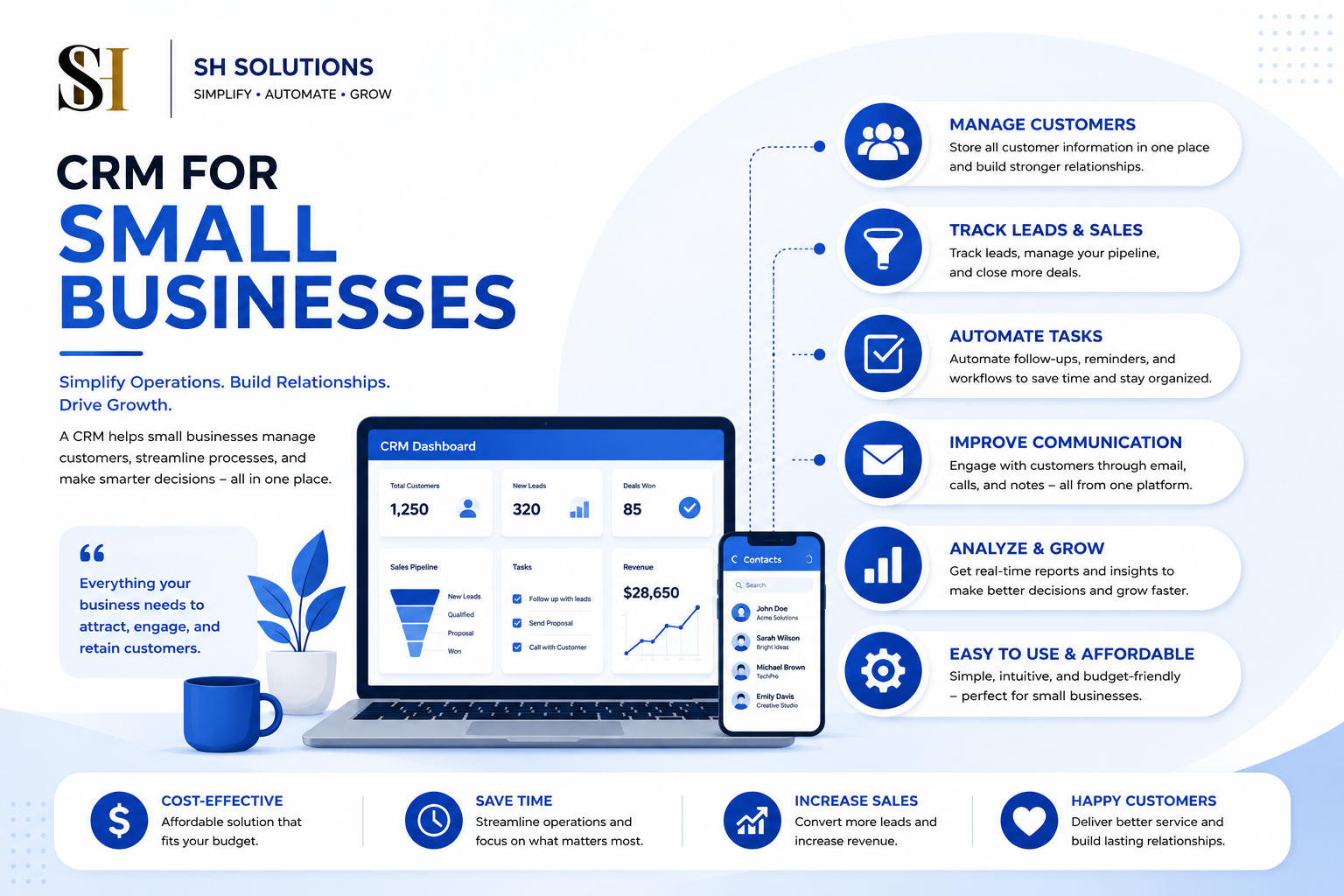 CRM is not only useful for large companies. Small businesses can also benefit from using CRM systems.
When a business has a small team, it can be difficult to manually manage every customer interaction. A CRM can help organize customer information and automate repetitive tasks.
For small businesses, CRM can help with:
- Managing leads
- Tracking customer inquiries
- Scheduling follow-ups
- Managing sales
- Improving customer service
- Maintaining customer records
A simple CRM system can help a growing business stay organized as its customer base increases.
Benefits of CRM for Sales Teams
Sales teams can use CRM to manage leads and opportunities more effectively.
Instead of relying on memory or scattered notes, sales professionals can see important information about prospects in one place.
CRM can help sales teams:
- Prioritize leads
- Track sales opportunities
- Schedule follow-ups
- Monitor sales pipelines
- Identify potential customers
- Improve sales forecasting
- Reduce missed opportunities
This can make the sales process more organized and efficient.
Benefits of CRM for Customer Service
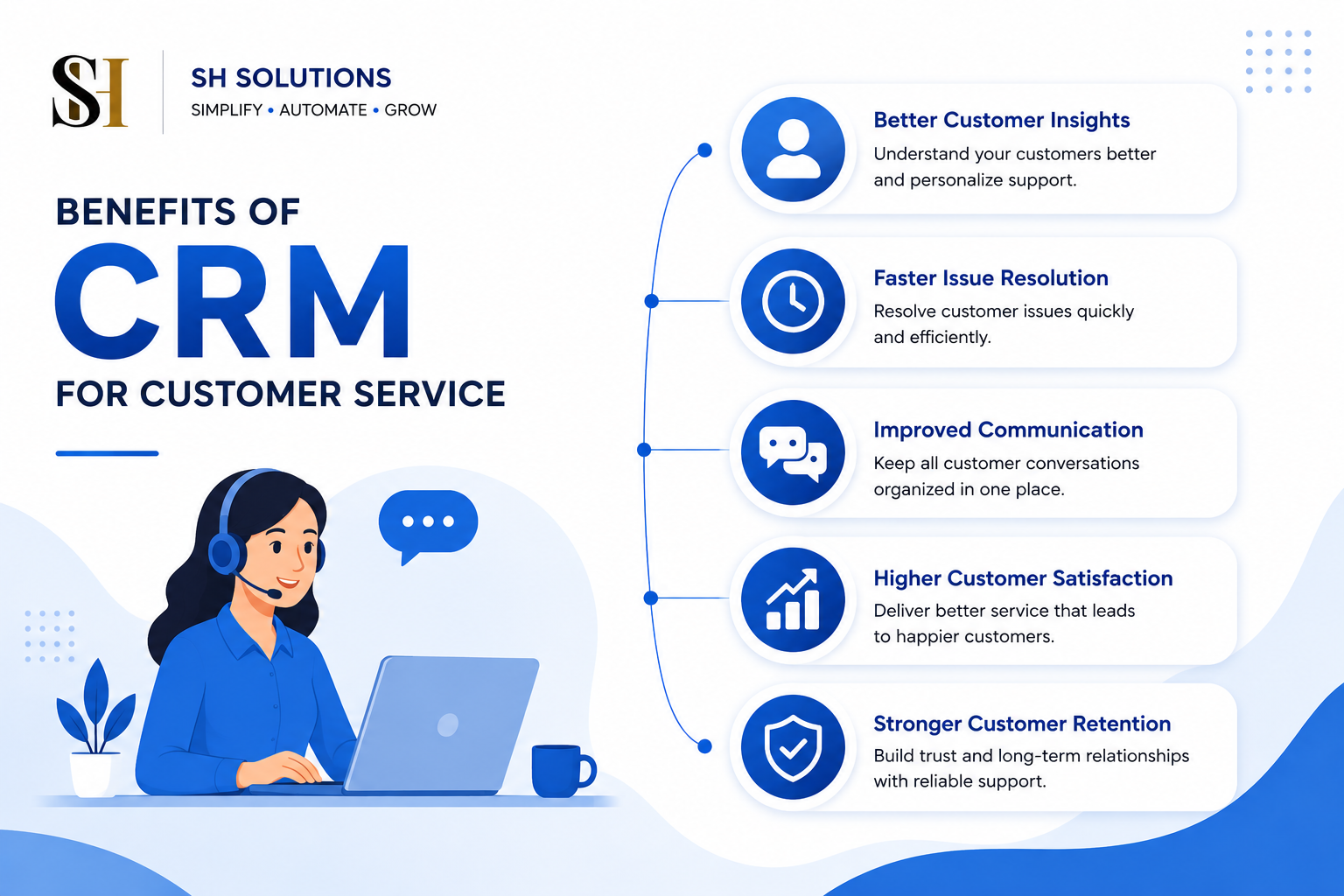 Customer service teams need access to accurate customer information to provide effective support.
A CRM can show previous purchases, conversations, complaints, support requests, and other relevant details.
This allows customer service representatives to understand the customer’s situation without asking them to repeat the same information multiple times.
As a result, businesses can provide faster and more personalized support.
Customer Retention and CRM
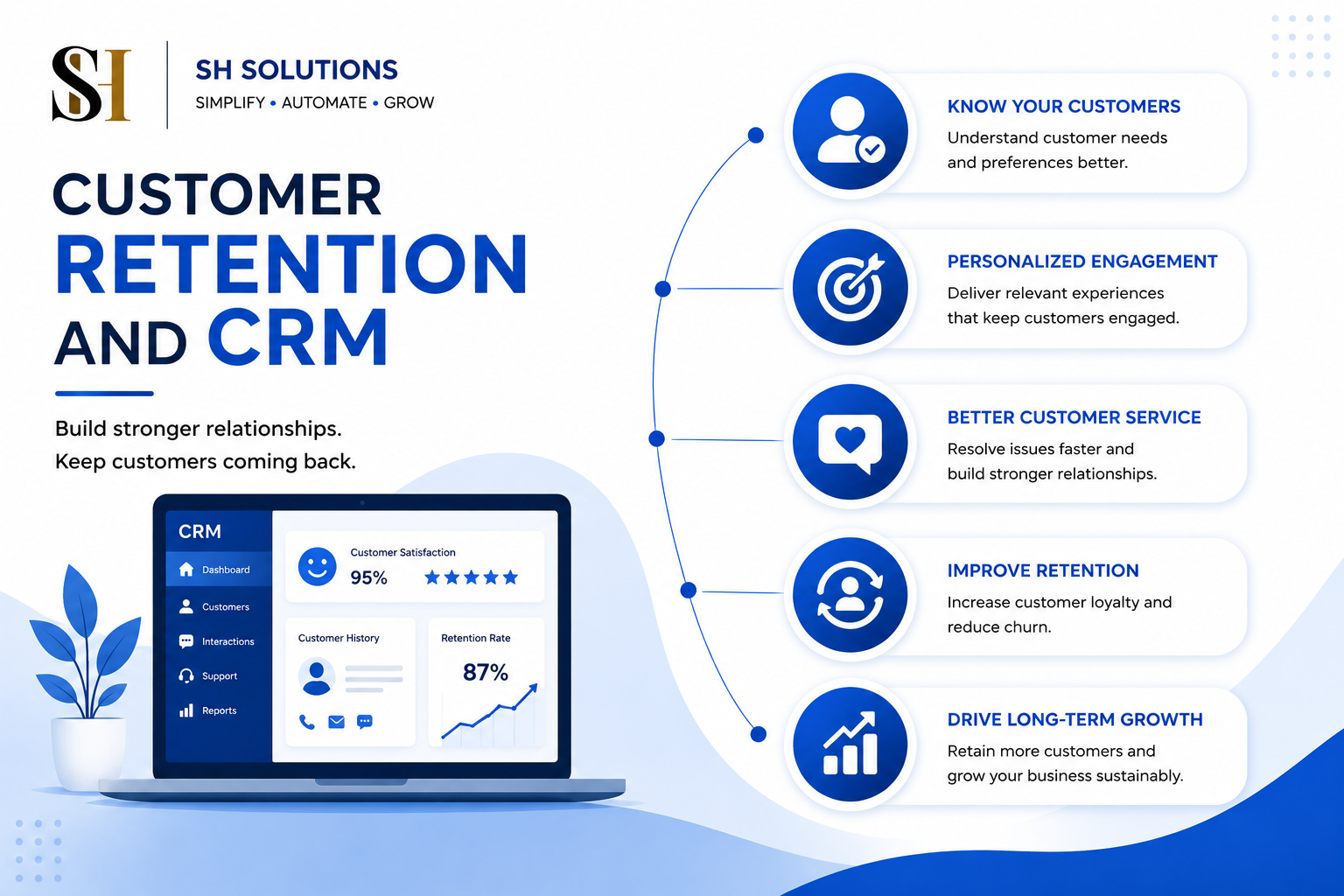 Getting a new customer is only one part of business growth. Retaining existing customers can also be important for long-term success.
CRM helps businesses understand customer behavior and identify opportunities to maintain relationships.
Businesses can use CRM data to:
- Send personalized communication
- Offer relevant products
- Follow up with customers
- Identify inactive customers
- Provide better support
- Create loyalty campaigns
When customers receive relevant communication and consistent service, businesses have more opportunities to build long-term relationships.
CRM Metrics Businesses Should Track
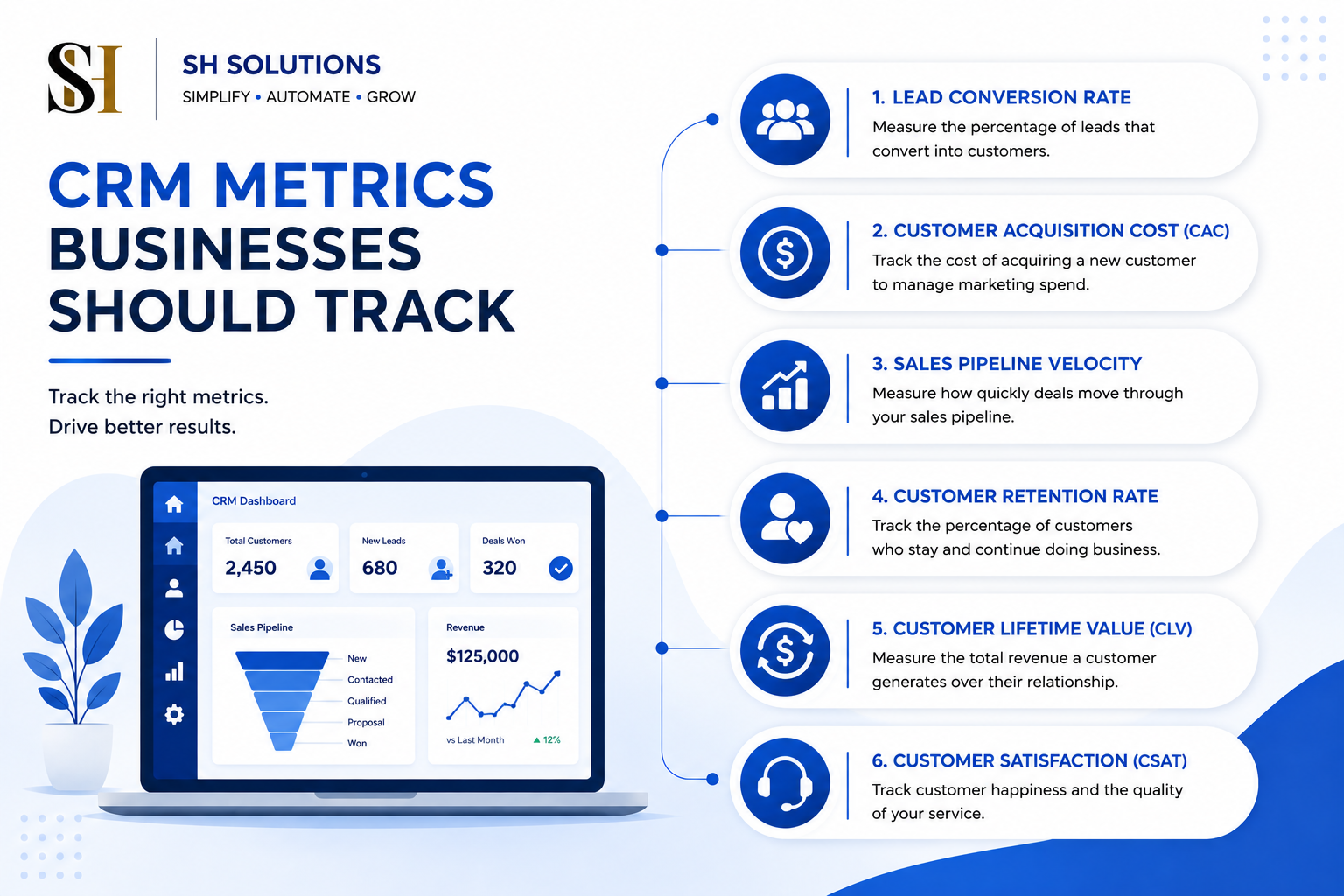 CRM systems can provide many useful metrics. Some important ones include:
Customer Acquisition Cost (CAC)
Customer Acquisition Cost measures how much a business spends to acquire a new customer.
Customer Lifetime Value (CLV)
Customer Lifetime Value estimates the total value a customer may generate during their relationship with a business.
Lead Conversion Rate
This measures the percentage of leads that become customers.
Customer Retention Rate
This measures how effectively a business retains its customers over a specific period.
Sales Conversion Rate
This measures the percentage of sales opportunities that result in successful sales.
Average Sales Cycle
This measures the average amount of time required to convert a lead into a customer.
Tracking these metrics can help businesses understand their sales and customer relationship performance.
CRM Automation
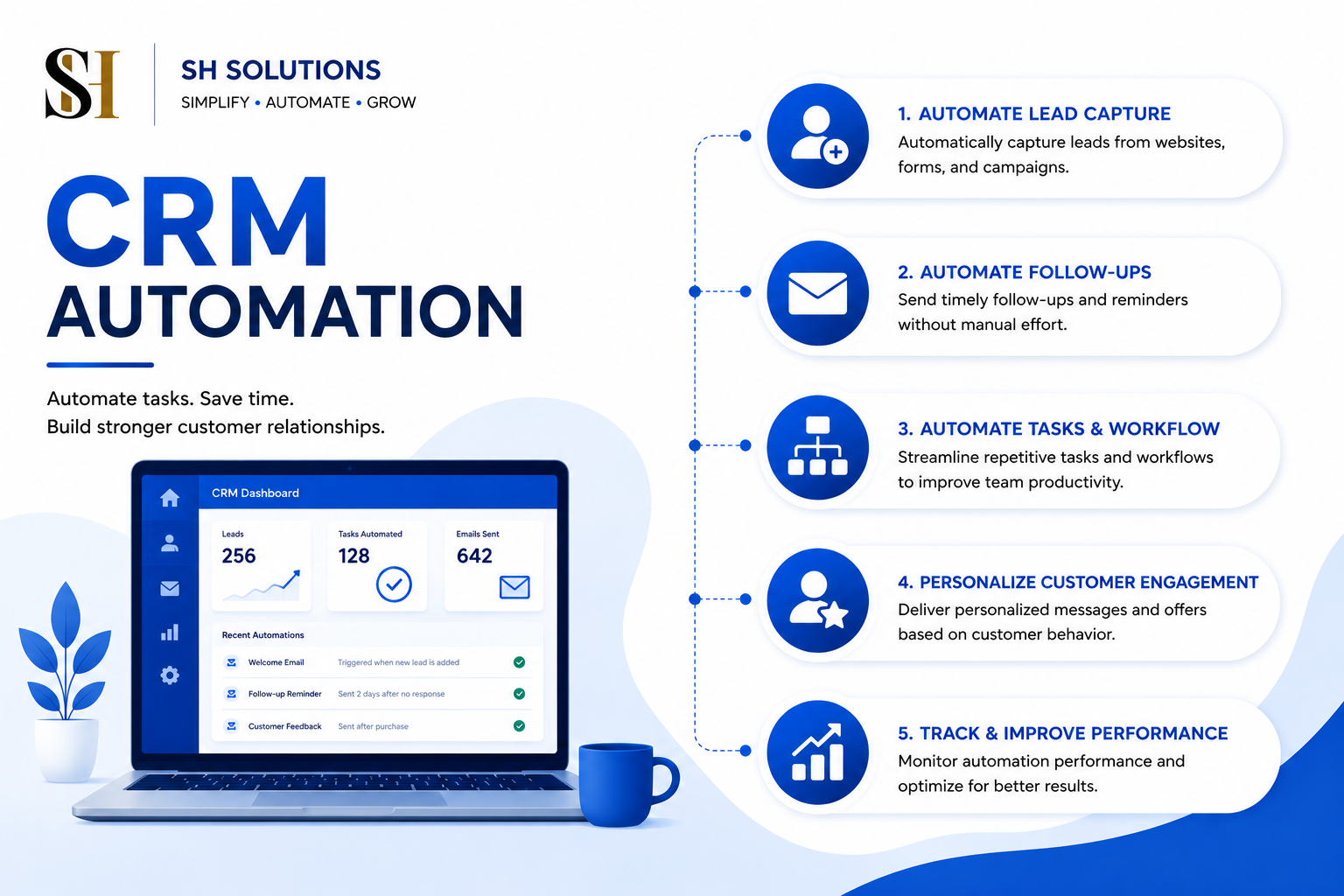 One of the biggest advantages of modern CRM platforms is automation.
Businesses can automate repetitive tasks such as:
- Sending follow-up emails
- Creating reminders
- Assigning leads to sales representatives
- Updating customer records
- Sending welcome messages
- Moving leads through sales stages
- Generating reports
Automation saves time and allows employees to focus more on important customer interactions.
How to Choose the Right CRM
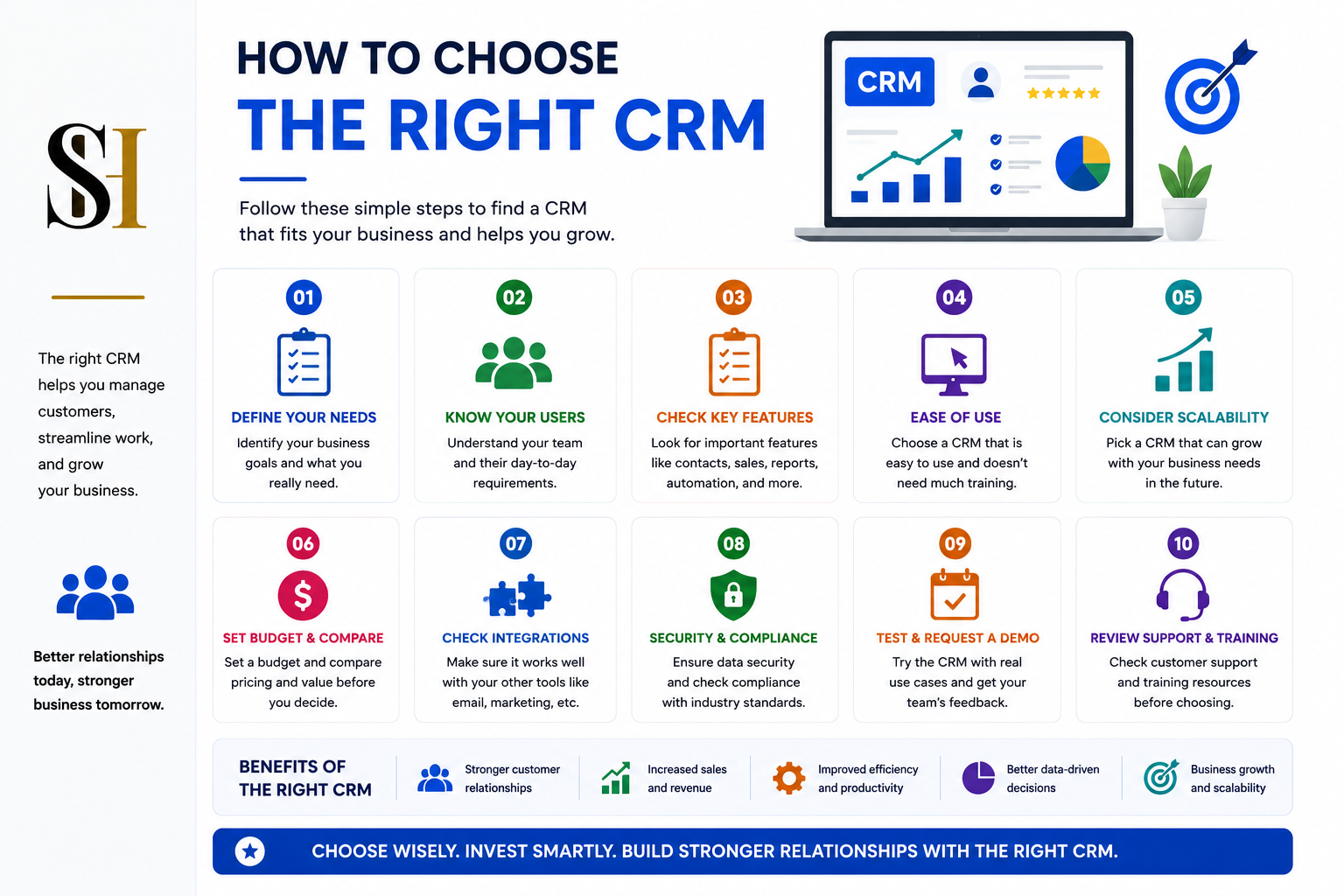 Choosing a CRM depends on the size, goals, and requirements of a business.
Before selecting a CRM platform, consider:
Business Requirements
Identify what you want the CRM to accomplish. You may need sales management, marketing automation, customer support, or all three.
Ease of Use
A CRM should be easy for employees to understand and use.
Scalability
Choose a system that can grow with your business and support more customers and users in the future.
Integration
Check whether the CRM can integrate with tools such as email platforms, websites, marketing platforms, accounting software, and communication tools.
Cost
Consider subscription fees, features, number of users, and additional costs before making a decision.
Security
Customer information is valuable, so businesses should consider data security and access controls when choosing a CRM.
Common CRM Mistakes to Avoid
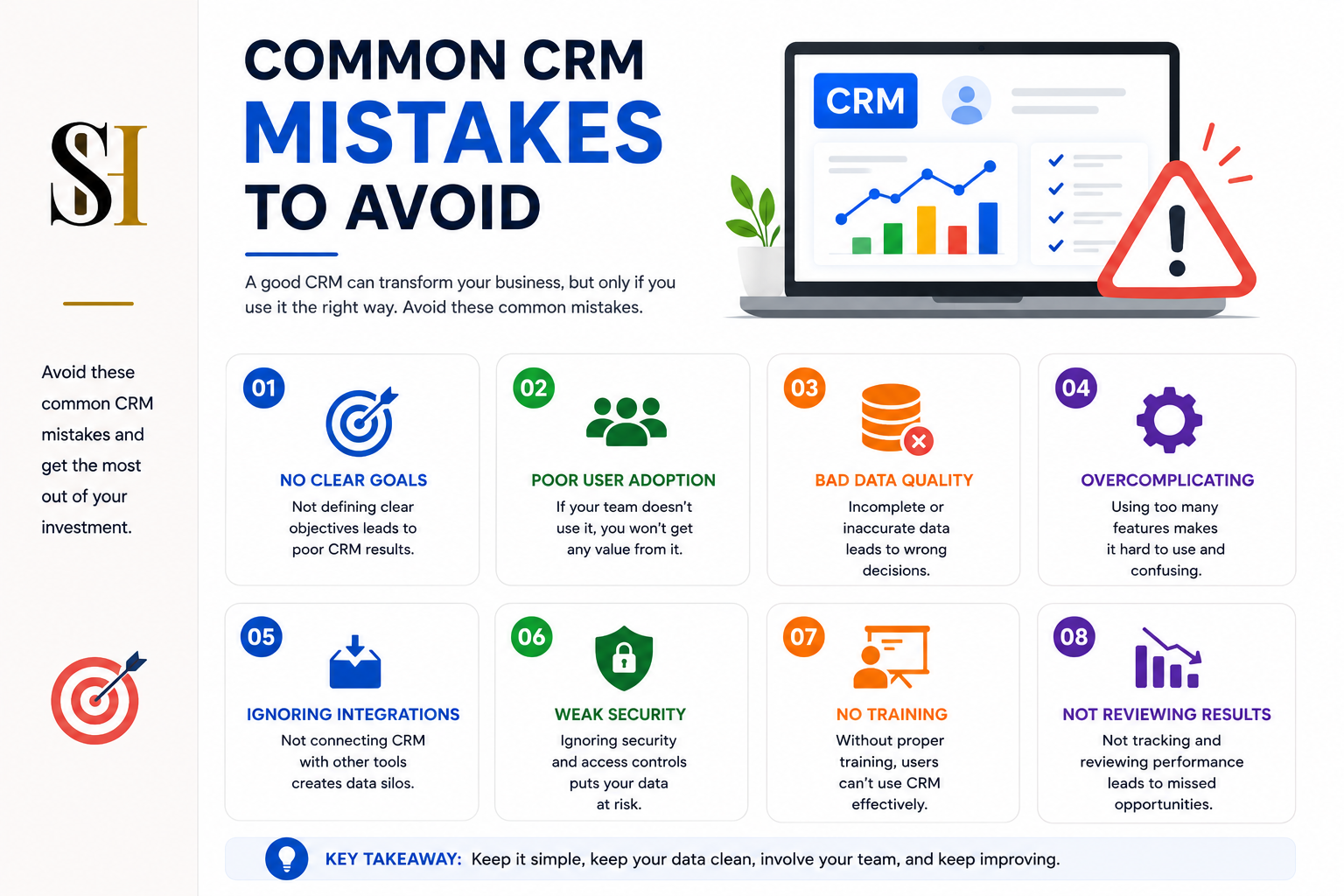 Although CRM can provide many benefits, poor implementation can reduce its effectiveness.
Some common mistakes include:
- Choosing a CRM without defining business goals
- Collecting unnecessary customer data
- Failing to update customer information
- Not training employees properly
- Ignoring data quality
- Using too many unnecessary features
- Not monitoring CRM performance
Businesses should focus on creating a clear CRM strategy rather than simply purchasing software.
Future of Customer Relationship Management
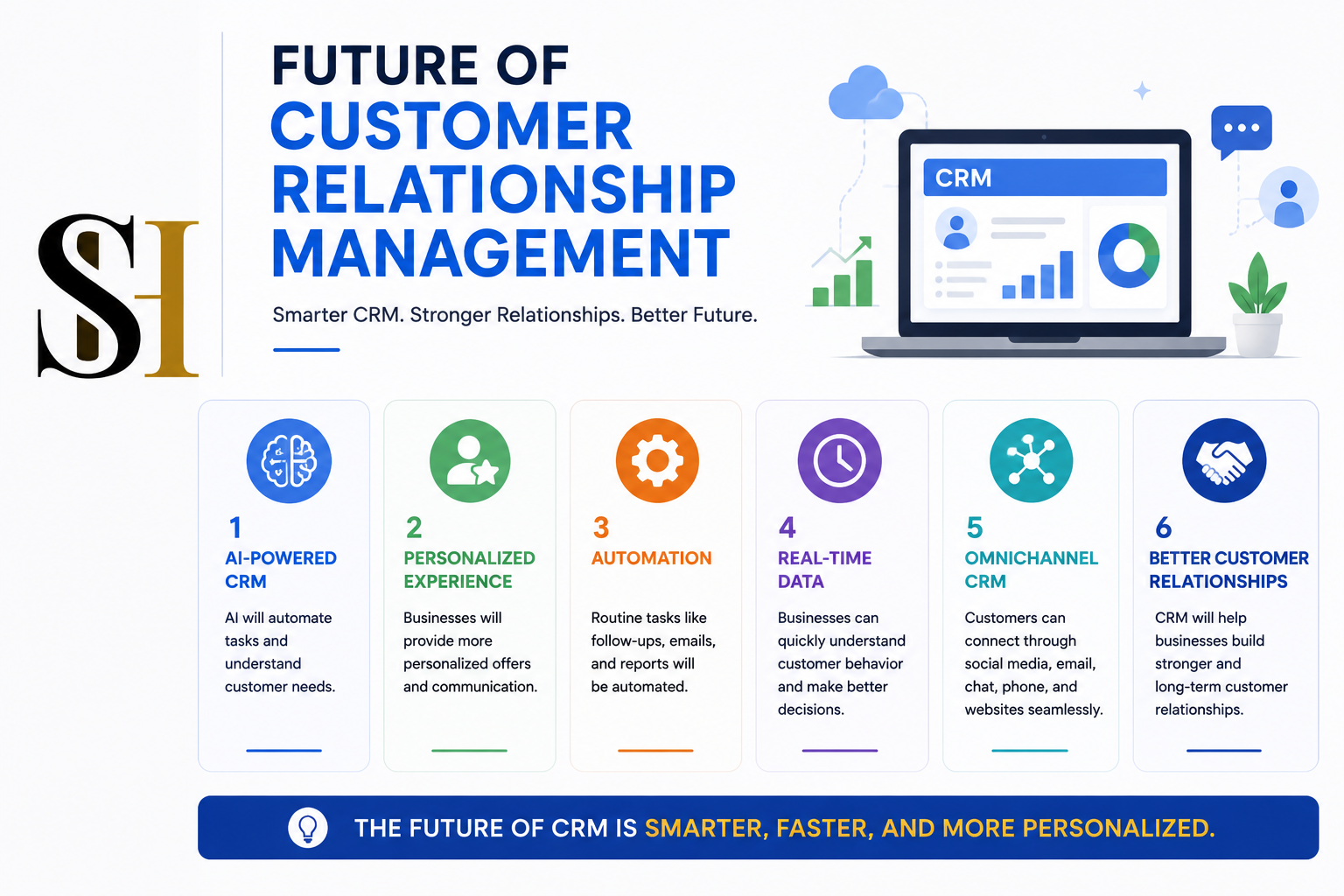 The future of Customer Relationship Management (CRM) is closely connected with artificial intelligence, automation, personalization, and data analytics.
AI-powered CRM systems can help businesses identify customer patterns, automate repetitive tasks, provide recommendations, and improve forecasting.
As businesses collect more customer data across digital channels, CRM systems will continue to become important tools for creating personalized customer experiences.
Conclusion
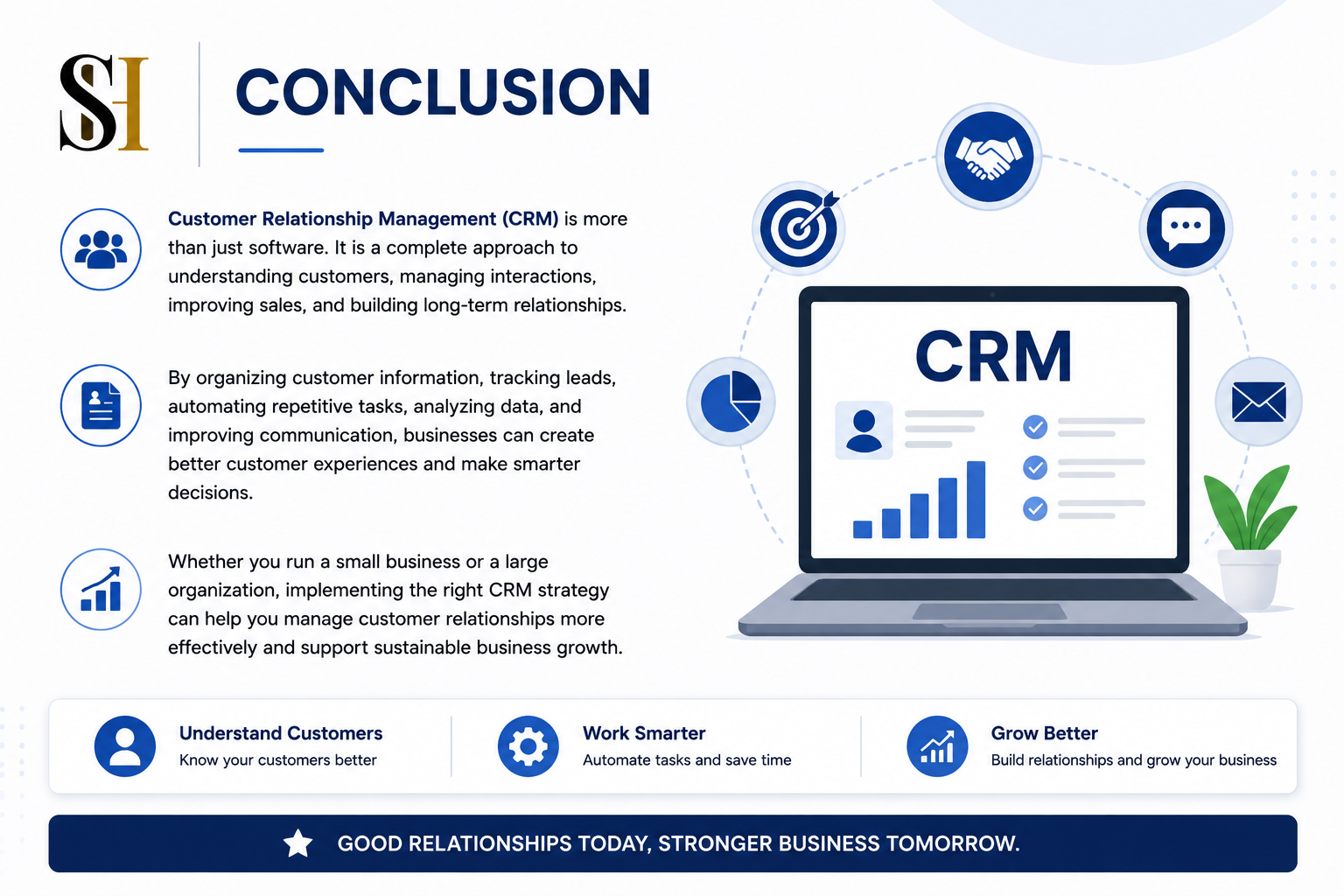 Customer Relationship Management (CRM) is more than just software. It is a complete approach to understanding customers, managing interactions, improving sales, and building long-term relationships.
By organizing customer information, tracking leads, automating repetitive tasks, analyzing data, and improving communication, businesses can create better customer experiences and make smarter decisions.
Whether you run a small business or a large organization, implementing the right CRM strategy can help you manage customer relationships more effectively and support sustainable business growth.
Customer Relationship Management (CRM)
SEO Title: Customer Relationship Management (CRM): A Complete Guide for Businesses
Meta Description: Learn what Customer Relationship Management (CRM) is, how it works, its types, benefits, features, metrics, automation, and importance for modern businesses.