
Digital advertising is one of the most powerful ways for businesses to promote their products and services through online platforms. It helps businesses connect with potential customers where they spend a large part of their time — on search engines, social media, websites, apps, and other digital platforms.
Unlike traditional advertising methods such as newspapers, television, radio, and billboards, digital advertising allows businesses to reach a specific target audience based on factors such as age, location, interests, online behaviour, and search activity.https://www.digitalvidya.com/blog/
For example, a clothing business can show its advertisements specifically to people who are interested in fashion, while a local restaurant can target people living near its location.
Another major advantage of digital advertising is that businesses can measure the performance of their campaigns. They can track how many people saw an advertisement, clicked on it, visited the website, generated a lead, or made a purchase. Based on these results, businesses can improve their campaigns and use their advertising budget more effectively.
Why Is Digital Advertising Important?
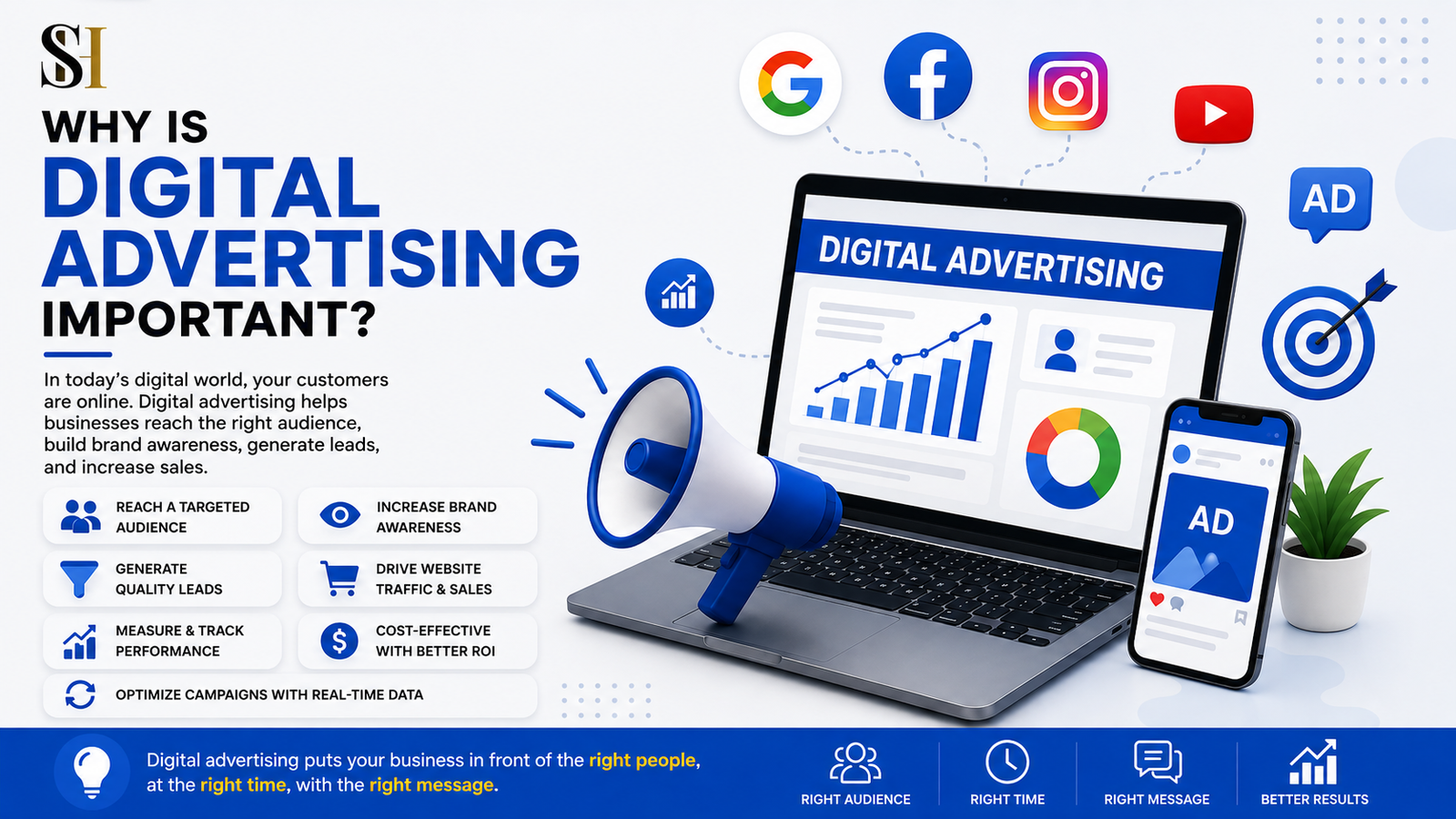 Digital advertising is important because customers are increasingly using the internet to search for information, compare products, communicate with brands, and make purchasing decisions.
Businesses can use digital advertising to:
- Increase brand awareness
- Reach new customers
- Generate leads
- Increase website traffic
- Promote products and services
- Increase online sales
- Retarget potential customers
- Measure advertising performance
- Build a stronger online presence
Even small businesses can start with a limited advertising budget and gradually increase their spending based on campaign results.
How Does Digital Advertising Work?
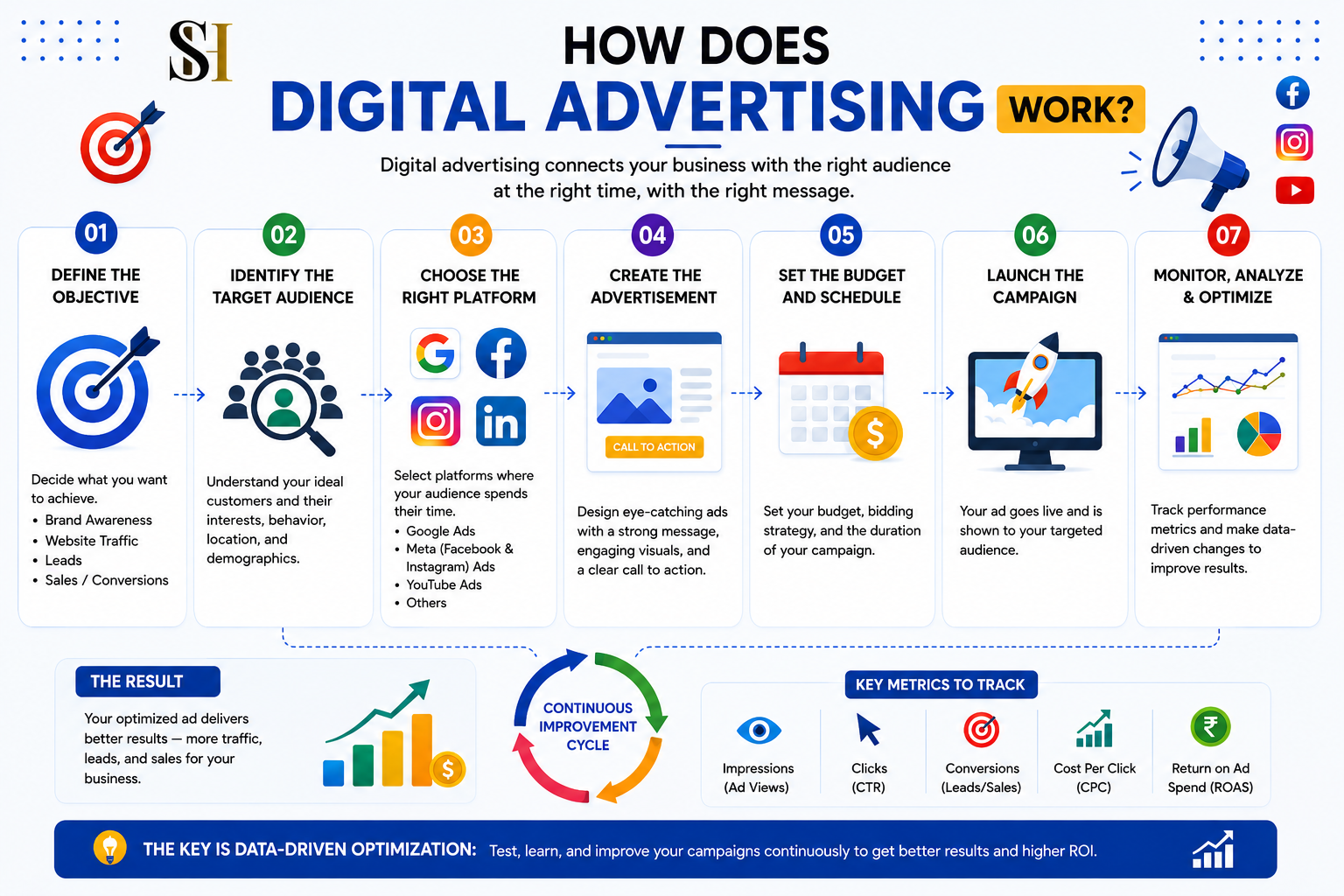
https://www.clixoni.com/blog/marketing/how-does-digital-advertising-work/Digital advertising works by connecting a business with its target audience through paid advertisements on online platforms. The process involves setting a goal, identifying the right audience, creating an advertisement, choosing a platform, setting a budget, launching the campaign, and continuously measuring and improving the results.
1. Set a Clear Advertising Goal
The first step is to decide what the business wants to achieve through the campaign. Different businesses may have different goals, such as:
Increasing brand awareness
Getting more website visitors
Generating leads
Increasing enquiries
Promoting a product or service
Increasing online sales
Getting app downloads
Having a clear goal helps businesses choose the right advertising strategy and measure whether the campaign is successful.
2. Identify the Target Audience
After setting the goal, businesses need to identify who they want to reach.
Digital advertising allows businesses to target people based on factors such as:
Age
Location
Gender
Interests
Online behaviour
Search activity
Demographics
For example, a local clothing store can target people in its city who are interested in fashion. This helps the business avoid showing advertisements to people who are unlikely to be interested in the product.
3. Create the Advertisement
The next step is creating an advertisement that attracts the target audience. Depending on the platform, an ad can include:
Images
Videos
Headlines
Descriptions
Offers
Product information
Call-to-action buttons
A strong advertisement should communicate the main message clearly and encourage users to take action, such as Shop Now, Learn More, Contact Us, or Sign Up.
4. Choose the Right Advertising Platform
Businesses then select the platform where their target audience is most active.
Common platforms include:
Google Ads – Useful for reaching people actively searching for products or services.
Facebook and Instagram Ads – Useful for audience targeting, brand awareness, leads, and sales.
YouTube Ads – Useful for video-based advertising.
Display Networks – Useful for showing visual advertisements across websites and apps.
Choosing the right platform can have a major impact on campaign performance.
5. Set the Advertising Budget
Businesses decide how much money they want to spend on the campaign. The budget can depend on the business’s goals, audience size, platform, and expected results.
Digital advertising gives businesses flexibility because they can start with a specific budget and adjust their spending based on campaign performance.
6. Launch the Campaign
Once the audience, advertisement, platform, and budget are ready, the campaign can be launched.
The advertising platform displays the advertisement to users who match the selected targeting criteria.
For example, an Instagram advertisement for a fashion brand may appear in the feeds of users who match the brand’s selected audience.
7. Track Campaign Performance
After launching the campaign, businesses need to monitor its performance.
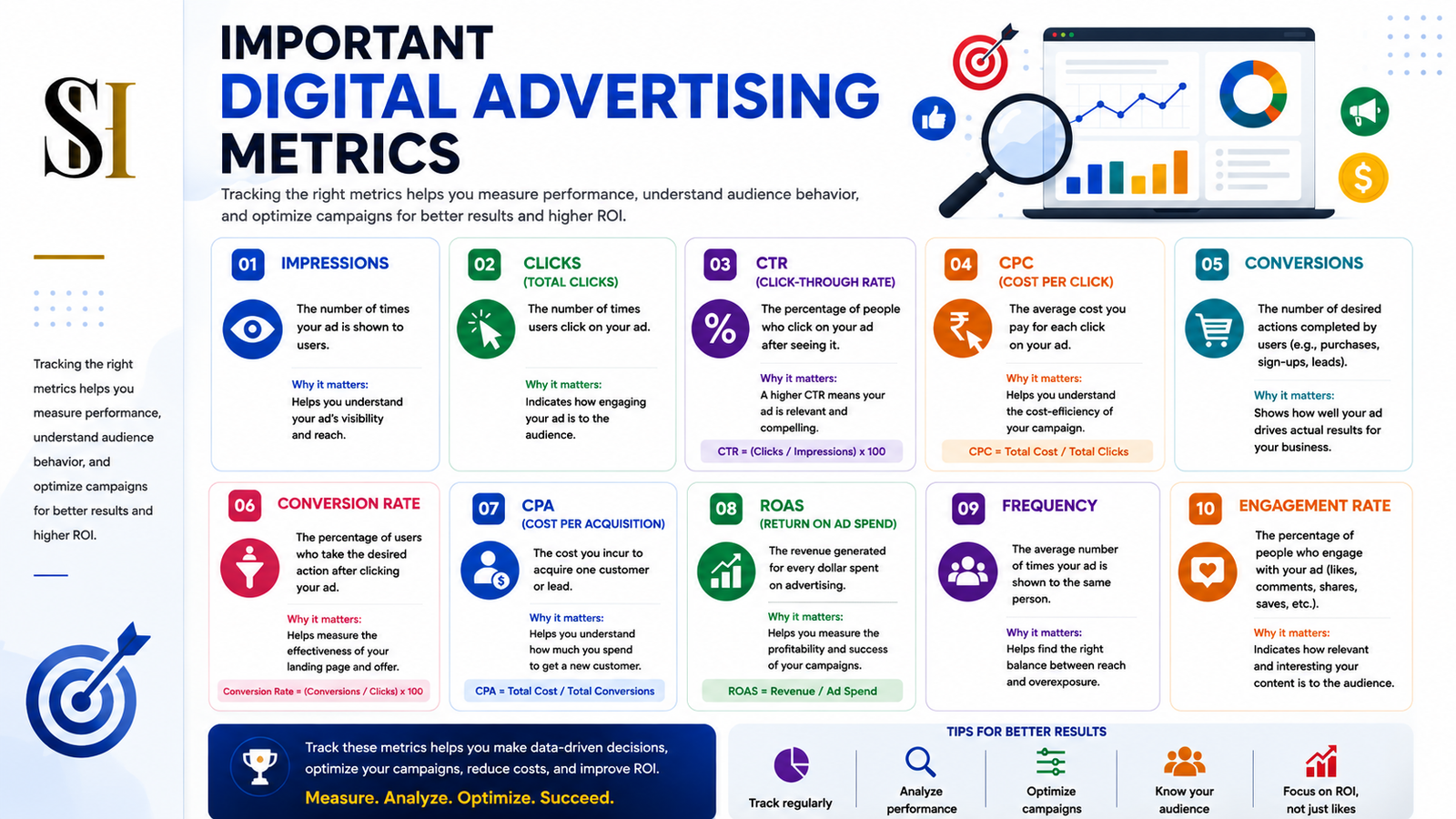
Important metrics include:
Impressions – How many times the ad was displayed
Clicks – How many users clicked the ad
CTR – Percentage of users who clicked after seeing the ad
CPC – Average cost for each click
Conversions – Number of desired actions completed
Conversion Rate – Percentage of users who converted
ROAS – Revenue generated compared with advertising spend
These metrics help businesses understand whether their advertisements are producing the desired results.
8. Optimize the Campaign
Digital advertising does not end after launching an advertisement. Businesses can use the performance data to improve their campaigns.
They may change:
Target audience
Ad design
Video or image
Headline
Call to action
Budget
Keywords
Bidding strategy
For example, if one advertisement receives more conversions than another, the business can focus more of its budget on the better-performing advertisement.
Simple Digital Advertising Process
Set a Goal → Identify Audience → Create Ad → Choose Platform → Set Budget → Launch → Track Results → Optimize
Conclusion
In simple terms, digital advertising works by delivering the right advertisement to the right audience at the right time and measuring what happens afterward. By continuously tracking results and optimizing campaigns, businesses can improve their reach, generate more leads, increase sales, and make better use of their advertising budget.
Types of Digital Advertising
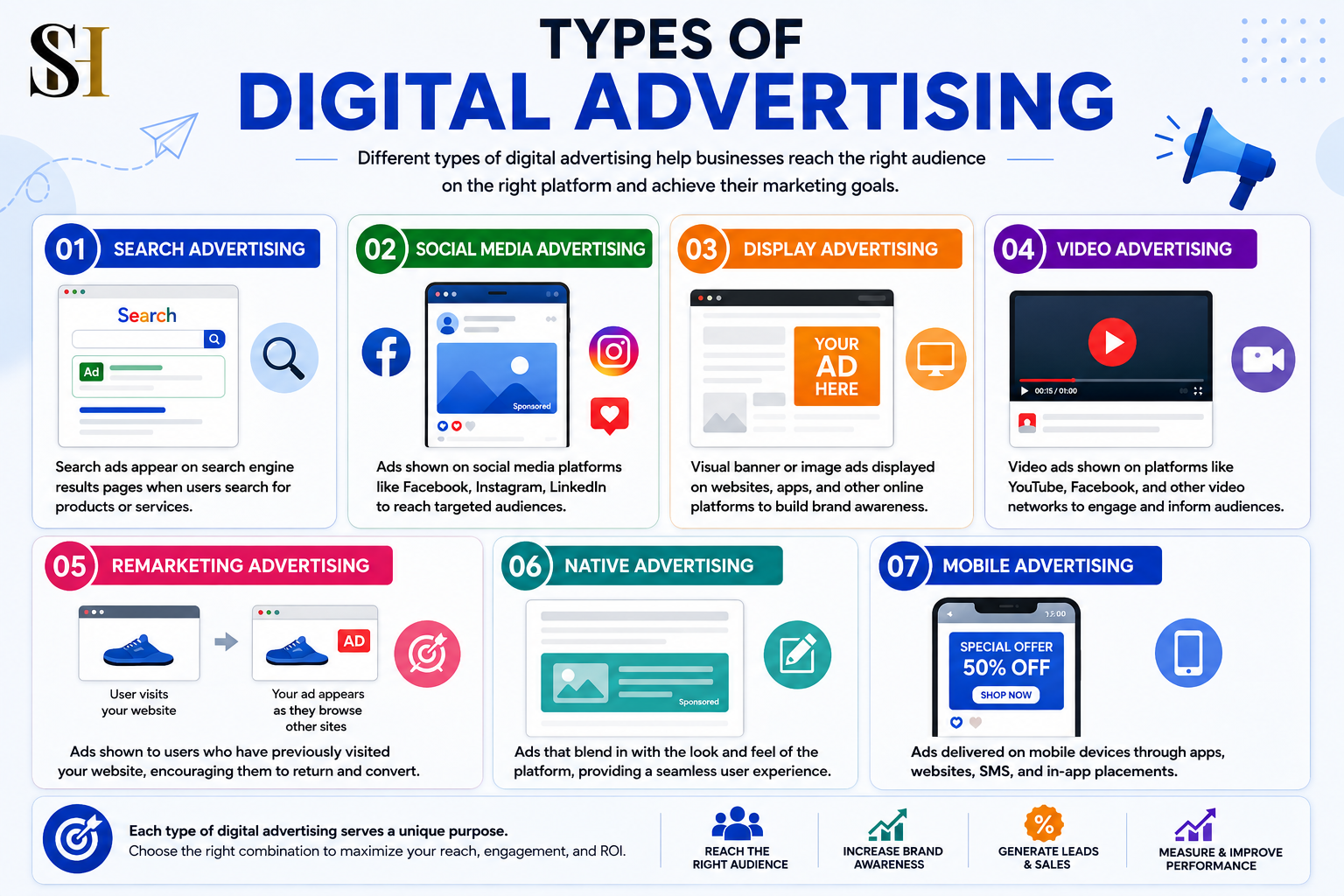 There are several types of digital advertising, including: https://blog.mercadeo.co.in/types-of-digital-advertising/
1. Search Advertising
Search advertising displays paid advertisements on search engine results pages. For example, when someone searches for “best digital marketing agency near me,” businesses can show an advertisement related to that search.
2. Social Media Advertising
Social media advertising allows businesses to promote their products and services on platforms such as Facebook and Instagram. Advertisers can target users based on demographics, interests, behaviour, and location.
3. Display Advertising
Display advertising uses visual advertisements such as banners, images, and graphics on websites and apps. These advertisements are useful for increasing brand visibility and attracting users to a website.
4. Video Advertising
https://www.outbrain.com/blog/online-video-advertising-guide/Video advertisements are displayed on platforms such as YouTube and social media. Businesses can use videos to demonstrate products, explain services, tell stories, and engage audiences.
5. Remarketing Advertising
Remarketing allows businesses to show advertisements to people who have previously interacted with their website or online content.
For example, if a person visits an online clothing store but does not purchase anything, the business can later show advertisements reminding that person about the products.
Digital Advertising vs Traditional Advertising
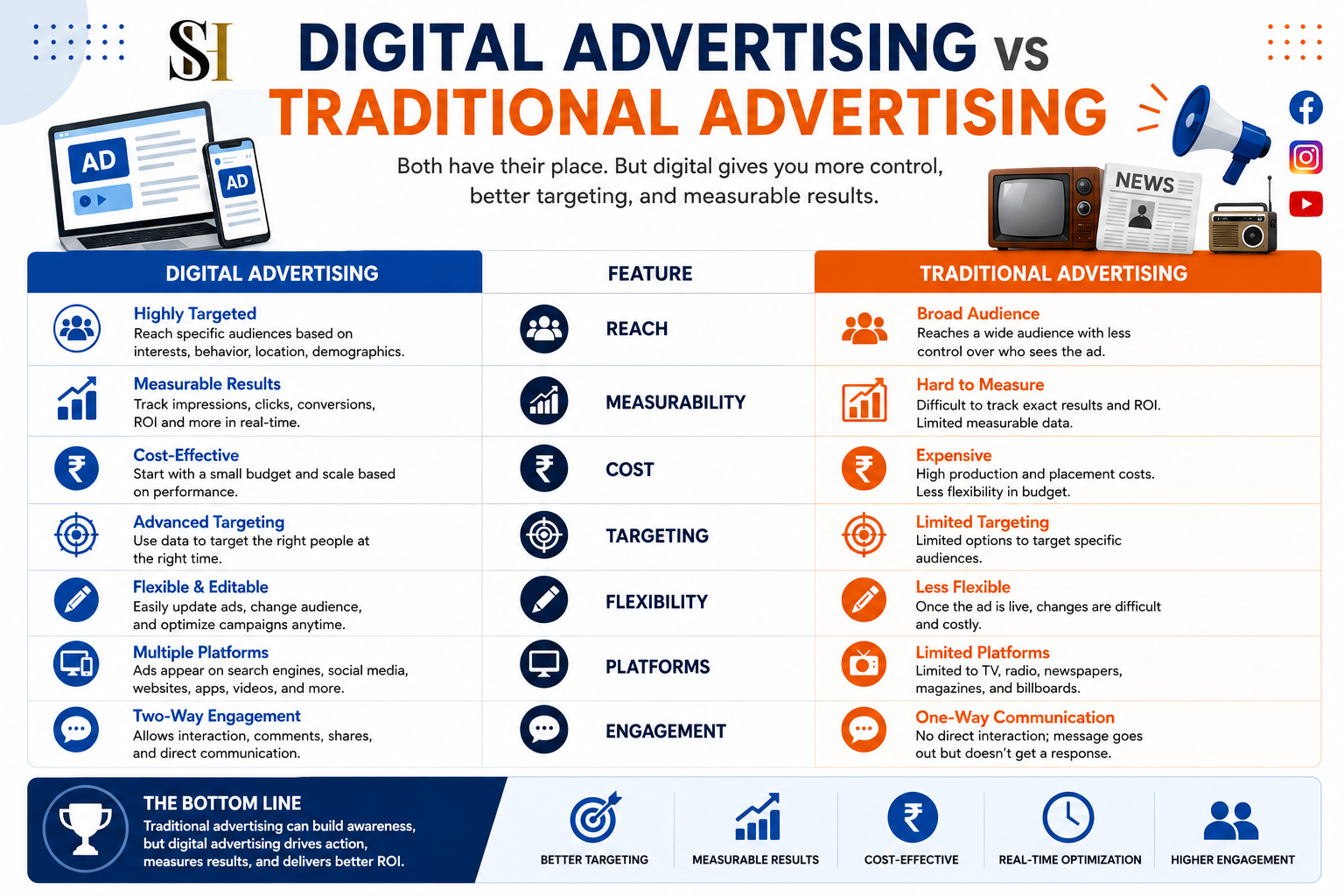 Traditional advertising mainly uses offline channels such as television, radio, newspapers, magazines, and billboards.
Digital advertising uses online platforms such as search engines, social media, websites, apps, and video platforms.
The biggest difference is targeting and measurement. Digital advertising provides detailed information about audience behaviour and campaign performance, allowing businesses to make data-driven decisions.
IMPORTANT DIGITAL ADVERTISING METRICS
Tips for a Successful Digital Advertising Campaign
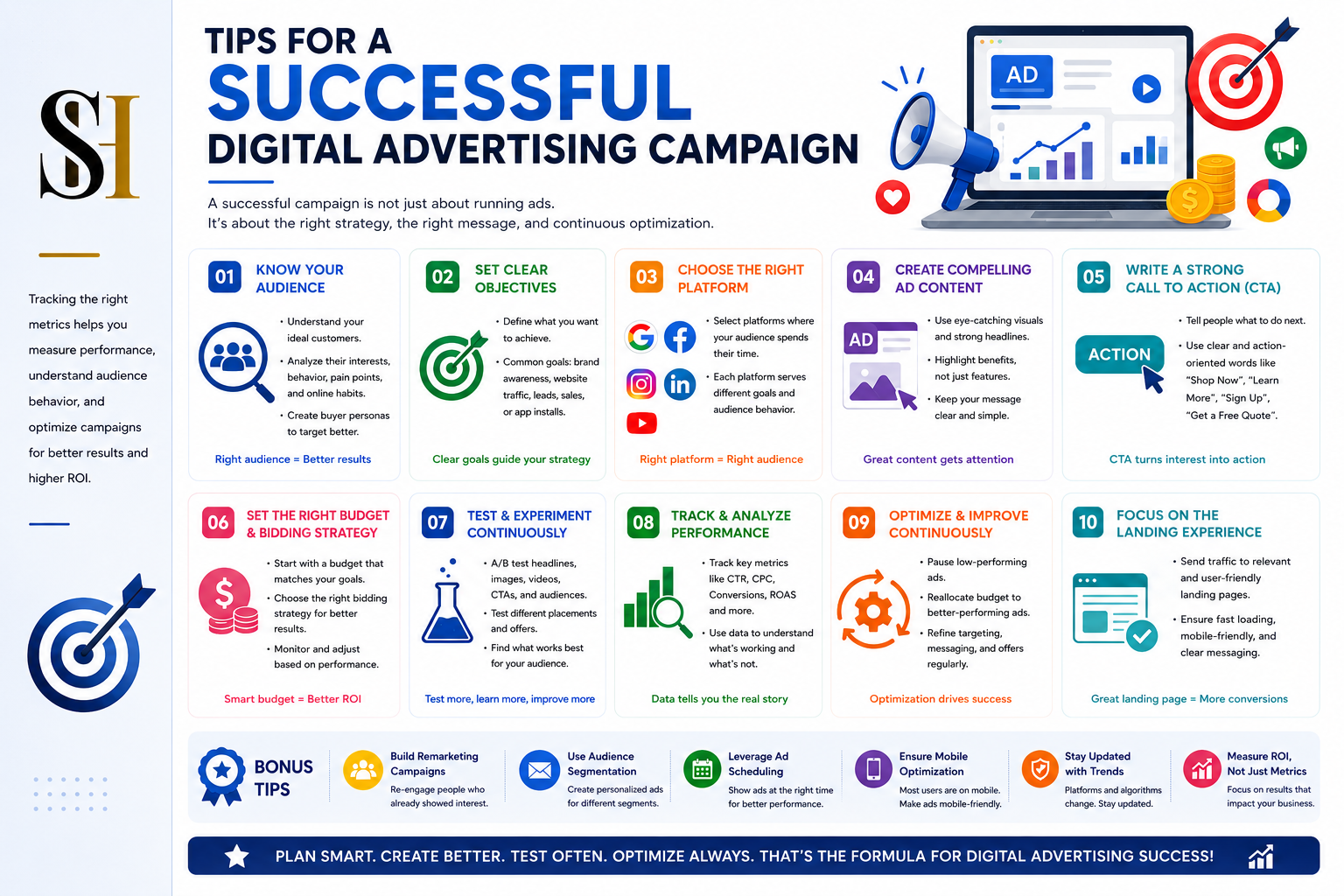 https://marketing.sfgate.com/blog/tips-for-building-a-successful-digital-advertising-campaignTo create an effective digital advertising campaign, businesses should:
- Clearly define their advertising objective.
- Understand their target audience.
- Choose the right advertising platform.
- Create attractive and relevant ad content.
- Use a clear call-to-action (CTA).
- Set an appropriate advertising budget.
- Track important campaign metrics.
- Test different advertisements.
- Analyse the results regularly.
- Optimise campaigns based on performance
- CONCLUSION
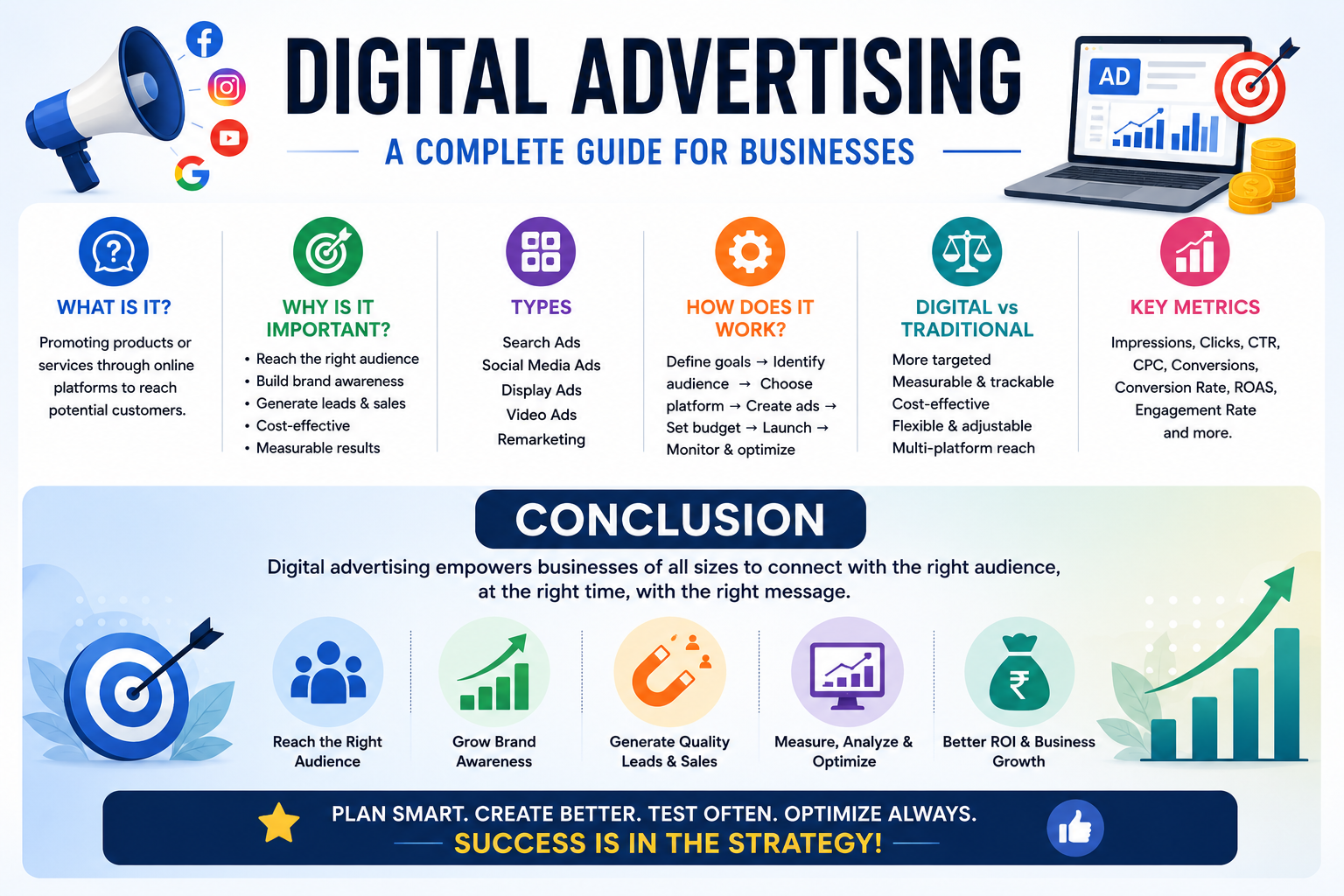 Digital advertising has become an important part of modern business marketing because customers are increasingly spending their time online. It gives businesses the opportunity to reach potential customers through platforms such as search engines, social media, websites, and video platforms.
One of the biggest advantages of digital advertising is targeting. Businesses can show their advertisements to specific audiences based on factors such as location, interests, behaviour, and search activity. This helps businesses reach people who are more likely to be interested in their products or services.
Digital advertising also makes it easier to measure and improve marketing performance. Businesses can track metrics such as impressions, clicks, CTR, conversions, CPC, and ROAS to understand how their campaigns are performing. Based on these results, they can adjust their audience, budget, advertisements, and strategies.
With proper audience targeting, engaging ad creatives, continuous testing, and data-driven optimization, businesses can improve their online visibility, generate more leads, increase sales, and achieve better returns from their advertising investment.